Academia.eduAcademia.edu

First Steps of Animal Domestication

2005

Abstract
sparkles

AI

The paper examines the methodologies employed in studying animal domestication in the Near East, highlighting the limitations of traditional markers like morphological changes and body size reduction in indicating domestication. It emphasizes the need for standardized proof and validation of these methodologies, drawing on archaeological evidence from the Zagros region. The findings suggest a reconsideration of the conceptual framework surrounding domestication, advocating for a revised geographic and temporal focus in research to better understand the complexities of domestication processes.

Key takeaways
sparkles

AI

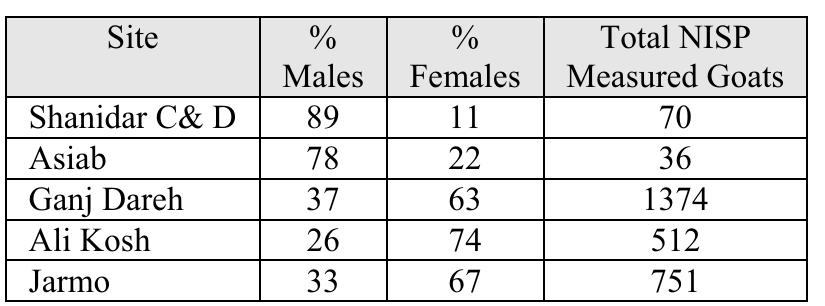
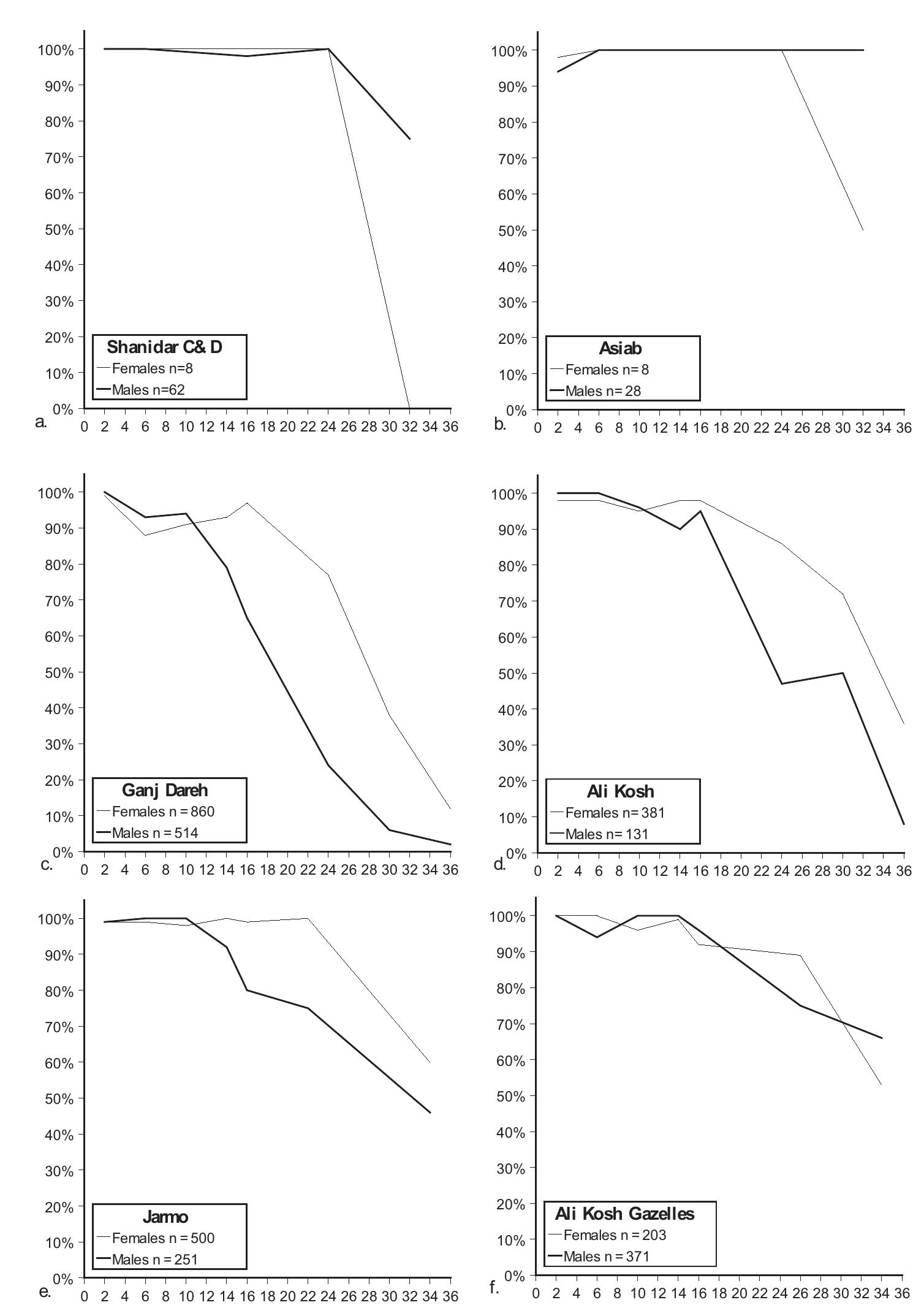
  1. Demographic profiling indicates goat management predates morphological changes by 500-1000 years.
  2. Morphological changes in goats show delayed response to domestication, complicating traditional markers.
  3. Body size reduction lacks clear cause-effect relationship with domestication, influenced by multiple factors.
  4. Reanalysis of ancient collections reveals new insights into goat domestication in the Zagros region.
  5. Research methods must evolve to accurately document initial stages of animal domestication.

References (53)

  1. Bar-Yosef, O. and Meadow, R. (1995) The origins of agriculture in the Near East. In D. Price and A.-B. Gebauer (eds) Last Hunters, First Farmers: New Perspectives on the Transition to Agri- culture, 39-94. School of American Research Advanced Seminar Series. Santa Fe, SAR Press.
  2. Binford (1971) Post-Pleistocene Adaptations. In S. Struever (ed.) Prehistoric Agriculture, 22-49. American Museum Sourcebooks in Anthropology. New York, The Natural History Press.
  3. Bradley, D. and Magee, D. (in press) Genetics and the origins of domestic cattle. In M. A. Zeder, D. Bradley, E. Emshwiller and B. D. Smith (eds) Documenting Domestication: New Genetic and Archaeological Paradigms. Berkeley, CA: University of California Press.
  4. Bradley, D. and Magee, D. (in press) Cattle. In M.A. Zeder, E. Emshwiller, B.D. Bradley, Smith and D. Decker-Walters (eds) Documenting Domestication: New Genetic and Archaeological Paradigms. Washington, D.C., Smithsonian Press.
  5. Braidwood (1960) The Agricultural Revolution. Scientific American 203, 130-48.
  6. Braidwood, R. J. and Howe, B. (1960) Prehistoric Investigations in Iraqi Kurdistan. The Oriental Institute of the University of Chicago Studies in Ancient Oriental Civilization, N°31. Chicago, University of Chicago Press.
  7. Bökönyi, S. (1969) Archaeological problems and methods of recognizing animal domestication. In P. J. Ucko and G. W. Dimbleby (eds) Domestication and Exploitation of Plants and Animals, 219-29. London, Duckworth.
  8. Bökönyi, S. (1977) Animal Remains from the Kermanshah Valley, Iran. BAR Supplementary Series, N°34. Oxford, BAR.
  9. Driesch, A. von den (1978) A Guide to the Measurement of Animal Bones from Archaeolgical Sites. Peabody Museum Bulletin, N°1. Cambridge, Peabody Museum.
  10. Evins, M. (1982) The fauna from Shanidar Cave: Mousterian wild goat exploitation in northeastern Iraq. Paléorient 8, 47-73.
  11. Ervynck, A., Dobney, K., Hongo, H., and Meadow, R. (2001) Born free? New evidence for the status of Sus scrofa at Neolithic Çayönü. Paléorient 27, 47-73.
  12. Helmer, D. (1989) Le development de la domestication au Proche- Orient de 9 500 à 7 500 BP: les nouvelles données d'el Kowm et de Ras Shamra. Paléorient 15, 111-21.
  13. Helmer, D. (1992) La Domestication des animaux par les hommes préhistoriques. Paris, Masson.
  14. Hemmer, H. (1990) Domestication: The Decline of Environmental Appreciation. Cambridge, Cambridge University Press.
  15. Hesse, B. (1978) Evidence for Husbandry from the Early Neolithic Sites of Ganj Dareh in Western Iran. PhD Dissertation, Columbia University, Ann Arbor, University Microfilms.
  16. Hesse, B. (1982) Slaughter patterns and domestication: the beginnings of pastoralism in western Iran. Man 17, 403-17.
  17. Hesse, B. (1984) These are our goats: the origins of herding in West Central Iran. In J. Clutton-Brock and C. Grigson (eds) Animals and Archaeology: 3. Early Herders and their Flocks, 243-64. BAR International Series 202. Oxford, BAR.
  18. Hillman, G. C. (1996) Late Pleistocene changes in wild plant-food available to hunter-gatherers of the northern Fertile Crescent: possible preludes to cereal cultivation. In D.R. Harris (ed.) The Origins and Spread of Agriculture and Pastoralism in Eurasia, 159-203. Washington, Smithsonian Institution Press.
  19. Hole, F. (1987) Chronologies in the Iranian Neolithic. In O. Aurenche, J. Evin, and F. Hours (eds) Chronologies in the Near East, 353-79. BAR International Series 379. Oxford, BAR.
  20. Hole, F. and Flannery, K.V. (1967) The Prehistory of Southwestern Iran: A Preliminary Report. Proceedings of the Prehistoric Society 33, 147-206.
  21. Hole, F, Flannery, K.V. and Neely, J.A. (1969) Prehistory and Human Ecology on the Deh Luran Plain. Memoirs of the Museum of Anthropology, N°1. Ann Arbor, The University of Michigan Press.
  22. Hongo, H. and Meadow, R. (1998) Pig exploitation at Neolithic Çayönü Tepesi (southeastern Anatolia). In S. Nelson (ed.) Ancestors for the Pigs: Pigs in Prehistory, 77-98. MASCA Research Papers in Science and Archaeology, vol. 15. Philadelphia, Museum Applied Science Center in Archaeology, University of Pennsylvania Museum of Archaeology and Anthropology.
  23. Hongo, H. and Meadow, R. (2000) Faunal remains from prepottery Neolithic levels at Çayönü, Southeastern Turkey: a preliminary report focusing on pigs (Sus sp.). in M. Mashkour, A.M. Choyke, H. Buitenhuis and F. Poplin (eds) Archaeozoology of the Near East, IVA., 121-40. ARC Publication N°32. Groningen, ARC.
  24. Horwitz, L. (2003) Temporal and spatial variation in Neolithic caprine exploitation strategies: a case study of fauna from the site of Yiftah'el (Israel). Palèorient 29, 19-58.
  25. Horwitz, L. K. and Ducos, P. (1998) An investigation into the origins of domestic sheep in the southern Levant. In H. Buitenhuis, L. Bartosiewicz, and A.M. Choyke (eds) Archaeozoology of the Near East, III., 80-95. ARC Publications N°18. Groningen, ARC. Horwitz, L. K., Tchernov, E., Ducos, P., Becker, C., von den Driesch, A., Martin, L., and Garrard, A. (1999) Animal domestication in the southern Levant. Paléorient 25, 63-80.
  26. Jarman M. R. and P. F. Wilkinson. (1972) Criteria for animal domestication. In E.S. Higgs (ed.) Papers in Economic Pre- history, 83-93. Cambridge, Cambridge University Press.
  27. Kuijt, I. (2000) Life in Neolithic Farming Communities: Social Organization, Identity, and Differentiation. New York, Kluwer Academic/Plenum Press.
  28. Lawrence, B. (1982) The principal food animals at Çayönü. In L.S. Braidwood and R.J. Braidwood (eds) Prehistoric Village Archae- ology in South-Eastern Turkey, 175-99. BAR International Series N°138. Oxford, BAR.
  29. Legge, A. (1996) The beginning of caprine domestication in south- west Asia. In Harris, D. R. (ed.) The Origins and Spread of Agriculture and Pastoralism in Eurasia, 238-63. Washington, Smithsonian Institution Press.
  30. Legge, A. J. and Rowley-Conwy, P. A. (2000) The exploitation of animals. In A. M. T. Moore, G. C. Hillman and A. J. Legge (eds) Village on the Euphrates: From Foraging to Farming at Abu, 423-74. Hureyra. Oxford, Oxford University Press.
  31. Luikart, G., Ludovic, G., Excoffier, L., Vigne, J.-D., Bouvet, J., and Taberlet, P. (2001) Multiple maternal origins and weak phylo- geographic structure in domestic goats. Proceedings of the National Academy of Sciences 98, 5927-5932.
  32. Luikart, G., Fernandez, H., Mashkour, M., England, P. R. and Taberlet, P. (in press) Origins and diffusion of domestic goats inferred from DNA markers: example analyses of mtDNA, Y- chromosome and microsatellites. In M. A. Zeder, D. Bradley, E. Emshwiller and B. D. Smith (eds) Documenting Domestication: New Genetic and Archaeological Paradigms. Berkeley, CA: University of California Press.
  33. Martin, L. and Russell, N. (in press) The Çatalhöyük faunal remains. In I. Hodder (ed.) Çatalhöyük 1995-1999: Subsistence and Ecology. McDonald Institute Monographs. Cambridge, McDonald Institute for Archaeological Research.
  34. Meadow, R. (1989) Osteological evidence for the process of animal domestication. In J. Clutton-Brock (ed.) The Walking Larder: Patterns of Domestication, Pastoralism, and Predation, 80-90. London, Unwin Hyman.
  35. Meadow, R. (1999) The use of size index scaling techniques for research on archaeozoological collections from the Middle East. In C. Becker, H. Manhart, J. Peters and J. Schibler (eds.) Historia Animalium ex Ossibus, Festschrift für Angela von den Driesch. Beiträge zur Paläoanatomie, Archäologie, Ägyptologie, Ethn- ologie und Geschichte der Tiermedizin, 285-300. Rahden/ Westf, Verlag Maire leidorf GmbH.
  36. Mellart, J. (1975) The Neolithic of the Near East. New York, Charles Scribnerr's and Sons.
  37. Perkins, D. (1964) Prehistoric fauna from Shanidar, Iraq. Science 144,1565-66.
  38. Perkins, D. J. (1969) Fauna of Çatal Hüyük: Evidence for early cattle domestication in Anatolia. Science 164, 177-8.
  39. Peters, J., Helmer, D., von den Driesch, A., and Segui, S. (1999) Animal husbandry in the northern Levant. Paléorient 25, 27- 48.
  40. Redding, R.W. and Rosenberg, M. (1998) Ancestral pigs: a New (Guinea) model for pig domestication in the Middle East. In S. Nelson (ed.) Ancestors for the Pigs: Pigs in Prehistory, 65-76. MASCA Research Papers in Science and Archaeology, vol. 15. Philadelphia, Museum Applied Science Center in Archaeology, University of Pennsylvania Museum of Archaeology and Anthropology.
  41. Reed, C. A. (1959) Animal Domestication in the Prehistoric Near East. Science 130, 1629-1639.
  42. Reed, C. A. (1960) A Review of the osteological evidence on animal domestication in the prehistoric Near East. In R.J. Braidwood and B. Howe (eds) Prehistoric Investigations in Iraqi Kurdistan, 119-145. The Oriental Institute of the University of Chicago Studies in Ancient Oriental Civilization, N°31. Chicago, Uni- versity of Chicago Press.
  43. Reed, C. A. (1983) Archaeozoological studies in the Near East: a short history (1960-1980). In L. Braidwood, R.J., Braidwood, B. Howe, C. A. Reed and P. J. Watson (eds) Prehistoric Archae- Vigne, J.-D., Carrére, I., Saliége, J.-F., Person, A., Bocherens, H., Guilaine, J., and Briois, F. (2000) Predomestic cattle, sheep, goat, and pig during the late 9th and the 8th millennium cal. BC on Cyprus: preliminary results of Shillourokambos (Parekklisha, Limassol). In M. Mashkour, A.M. Choyke, H. Buitenhuis, and F. Poplin (eds) Archaeozoology of the Near East, IVA., 83-106. ARC Publication N°32. Groningen, ARC.
  44. Zeder M. A. (1999) Animal domestication in the Zagros: a review of past and current research. Paléorient 25,11-25.
  45. Zeder M. A. (2001) A metrical analysis of a collection of modern goats (Capra hircus aegargus and Capra hircus hircus) from Iran and Iraq: implications for the study of caprine domestication. Journal of Archaeological Science 28, 61-79.
  46. Zeder M. A. (2003) Hiding in plain sight: the value of museum collections in the study of the origins of animal domestication. In G. Grupe and J. Peters (eds), Documenta Archaeobiologiaw 1: Deciphering Ancient Bones. The Research Potential of Bio- archaeological Collections, Yearbook of the State Collection of Palaeoanatomy. München, Germany, 125-138. Rahden/ Westf: Verlag M. Leidorf GmbH.
  47. Zeder M. A. (in press a.) A critical examination of markers of initial domestication in goats (Capra hircus). In M. A. Zeder, D. Bradley, E. Emshwiller and B. D. Smith (eds) Documenting Domestication: New Genetic and Archaeological Paradigms. Berkeley, CA: University of California Press.
  48. Zeder M. A. (in press b.) Reconciling rates of long bone fusion and tooth eruption and wear in sheep (Ovis) and goat (Capra). In D. Ruscillo (ed.), Ageing and Sexing Animals from Archaeological Sites. Oxford, Oxbow Press.
  49. Zeder M. A. and Hesse B. (2000) The Initial Domestication of Goats (Capra hircus) in the Zagros Mountains 10,000 Years Ago. Science 287, 2254-2257
  50. Zeder, M. A. (in press c) Archaeological Approaches to Documenting Animal Domestication. In M. A. Zeder, D. Bradley, E. Emshwiller and B. D. Smith (eds) Documenting Domestication: New Genetic and Archaeological Paradigms. Berkeley, CA: University of California Press.
  51. Zeder, M. A., Bradley, D., Emshwiller, E. and Smith, B. D. (in press) Documenting domestication: bringing together plants, animals, archaeology and genetics. In M. A. Zeder, D> Bradley, Emshwiller and B. D. Smith (eds) Documenting Domeestication: New Genetic and Archaeological Paradigms. Berkeley, CA: University of California Press.
  52. Zeder, M. A. and Lapham, H. A. (in prep.) Morphological criteria for distinguishing between the bones of sheep (Ovis aries) and goats (Capra hircus).
  53. Zohary, D., Tchernov, E., and Horwitz, L. K. (1998) The role of unconscious selection in the domestication of sheep and goats. Journal of Zoology 245, 129-135.

FAQs

sparkles

AI

What evidence supports the timeline for initial goat domestication in the Zagros region?add

AMS radiocarbon dating indicates goat management began at Ganj Dareh around 8900-8700 BP uncalibrated, predating morphological changes by up to 1000 years.

How does the demographic profiling method improve our understanding of domestication?add

Demographic profiling reveals evidence of herd management in goats at Ganj Dareh, while morphological changes appear much later, indicating management occurred before physical changes.

What role does environmental variation play in goat size in the Zagros?add

Geography significantly influences goat size; northern goats are larger, while southern populations are consistently smaller, regardless of domestication status.

Why are traditional markers like size reduction insufficient for assessing domestication?add

Size changes often result from multiple factors—including environmental conditions—rather than solely from domestication processes, complicating their use as reliable markers.

What implications do the findings have for the understanding of early livestock management?add

The findings suggest that initial management of livestock focused on demographic control rather than immediate morphological changes, necessitating new approaches to studying domestication.

Last updated
About the authors
Centre National de la Recherche Scientifique / French National Centre for Scientific Research, Alumnus
Smithsonian Institution, Department Member
Morty Proxy This is a proxified and sanitized view of the page, visit original site.