Asanga, Āsaṅga, Asaṅga, Asamga: 37 definitions
Introduction:
Asanga means something in Buddhism, Pali, Hinduism, Sanskrit, Jainism, Prakrit, Marathi, Hindi. If you want to know the exact meaning, history, etymology or English translation of this term then check out the descriptions on this page. Add your comment or reference to a book if you want to contribute to this summary article.
Images (photo gallery)


(+2 more images available)
In Hinduism
Purana and Itihasa (epic history)
Āsaṃga (आसंग).—See under ANAŚA.
Asaṅga (असङ्ग) refers to “one who is without attachment” and is used to describe Śiva, according to the Śivapurāṇa 2.3.25 (“The seven celestial sages test Pārvatī”).—Accordingly, as the seven Sages said (with false words) to Pārvatī: “[...] He [Śiva] is single without a second and without attachment [i.e., asaṅga]. He is after salvation, O gentle lady, how can a woman put up with him. O blessed one, even now, at our bidding, return to your house. Cast off this foolish intention. You will benefit thereby. [...]”.
1) Asaṅga (असङ्ग).—The son of Yuyudhāna.*
- * Matsya-purāṇa 45. 23.
2) Āsaṅga (आसङ्ग).—The son of Śvaphalka and Gāndini.*
- * Bhāgavata-purāṇa IX. 24. 16.

The Purana (पुराण, purāṇas) refers to Sanskrit literature preserving ancient India’s vast cultural history, including historical legends, religious ceremonies, various arts and sciences. The eighteen mahapuranas total over 400,000 shlokas (metrical couplets) and date to at least several centuries BCE.
Yoga (school of philosophy)
1) Asaṅga (असङ्ग) refers to “that which is unattached”, according to the Bṛhadāraṇyikopaniṣat 3.8.6, 8.—Accordingly, while describing the absolute nature of Brahma: “Gārgi said, ‘Yājñavalkya, that which is above the sky, below the earth, between the two and called [past, present and future], is stitched and cross-stitched in what?’ Yājñavalkya said, ‘Gārgi, the Brahmins call that very [thing] the imperishable one. [It is] not coarse, not particulated, not short, not long, bloodless, unlubricated, shadowless, undarkened, windless, spaceless, unattached (asaṅga), tasteless, scentless, invisible, inaudible, speechless, mindless [...]’”.
2) Āsaṅga (आसङ्ग) refers to “attachment (to sense objects)”, according to the Sarvajñānottara 29.40.—Accordingly, while describing the no-mind state: “Having thrown off attachment to sense objects (viṣaya-āsaṅga), one should [thus] eliminate one's mental activity. When one goes to the state of no mind, then that is the supreme bliss”.

Yoga is originally considered a branch of Hindu philosophy (astika), but both ancient and modern Yoga combine the physical, mental and spiritual. Yoga teaches various physical techniques also known as āsanas (postures), used for various purposes (eg., meditation, contemplation, relaxation).
Vedanta (school of philosophy)
Asaṅga (असङ्ग) or “unattached” refers to one of the attributes of the Ātman (one’s own self), according to the Aṣṭāvakragītā (5th century BC), an ancient text on spirituality dealing with Advaita-Vedānta topics.—Accordingly, [as Aṣṭavakra says to Janaka]: “[...] You are neither earth, water, fire, air or even ether. For liberation know yourself as consisting of consciousness, the witness of these. If only you will remain resting in consciousness, seeing yourself as distinct from the body, then even now you will become happy, peaceful and free from bonds. You do not belong to the Brahmin or any other caste, you are not at any stage, nor are you anything that the eye can see. You are unattached (asaṅga) and formless, the witness of everything—so be happy [asaṅgo'si nirākāro viśvasākṣī sukhī bhava]. [...]”.

Vedanta (वेदान्त, vedānta) refers to a school of orthodox Hindu philosophy (astika), drawing its subject-matter from the Upanishads. There are a number of sub-schools of Vedanta, however all of them expound on the basic teaching of the ultimate reality (brahman) and liberation (moksha) of the individual soul (atman).
In Buddhism
Tibetan Buddhism (Vajrayana or tantric Buddhism)
Asaṅga (असङ्ग) is the name of an ancient teacher belonging to the “lineage of vast conduct”, according to “the succession of Gurus in the Mahāmudrā lineages” in the Kagyü School of Tibetan Buddhism (the Mahāmudrā deals with the nature of the mind).—The graduated path of the three levels of beings, which is an adornment [for the Mahāmudrā], is of three lineages: 1. The lineage of vast conduct; 2. The lineage of the profound view; 3. The lineage of the blessing of practice.—[The lineage of vast conduct]—(1) The Lord of Sages [the Buddha], ... (3) Asaṅga,... and (14) Atiśa Dīpaṃkara.
1) {GL_TIB_PREFIX} (together with Asaṅga) refers to one of the “Two Great Charioteers” which are known in Tibetan as shing rta chen po gnyis.
2) Asaṅga (असङ्ग) (together with Nāgārjuna) are known as the “Two Supremes of Jambudvīpa” which are known in Tibetan as 'dzam gling mchog gnyis.—They are either Guṇaprabha and Śākyaprabhā (or Nāgārjuna and Asaṅga).
Asaṅga (असङ्ग) was a brother of Vasubandhu (280-360 A. D.) and a practitioner of Tantric Buddhism.—Tārānātha (Tārānāth) is reported to have said that Tantrism existed from very early times and was transmitted in a secret manner from the time of Asaṅga down to the time of Dharmakīrti. Asaṅga who was a brother of Vasubandhu (280-360 A. D.) must have flourished circa 300 A. D. and Dharmakīrti who is not mentioned by the Chinese traveller Hiuen Thsang but is referred to with great respect by I-Tsing very probably belonged to a period between 625-675 A. D.
Asaṅga (असङ्ग) is another name for 'phags pa thogs med—one of the Twenty-five Revered Figures who transmitted the teachings of the Mahāyāna blo sbyong (mind training) according to “Lineage of Mahāyāna Blo sbyong Masters” written in the Dergé edition of the gSung 'bum (lit. “collected works”)—a text written by thogs med bzang po (1295–1369)—a renowned master of Mind-training practices (in Tibetan: blo sbyong).

Tibetan Buddhism includes schools such as Nyingma, Kadampa, Kagyu and Gelug. Their primary canon of literature is divided in two broad categories: The Kangyur, which consists of Buddha’s words, and the Tengyur, which includes commentaries from various sources. Esotericism and tantra techniques (vajrayāna) are collected indepently.
Mahayana (major branch of Buddhism)
Asaṅgā (असङ्गा) [?] is the name of a Rākṣasī appointed as one of the Divine protector deities of Chan-chan, according to chapter 17 of the Candragarbha: the 55th section of the Mahāsaṃnipāta-sūtra, a large compilation of Sūtras (texts) in Mahāyāna Buddhism partly available in Sanskrit, Tibetan and Chinese.—In the Candragarbhasūtra, the Bhagavat invites all classes of Gods and Deities to protect the Law [dharma?] and the faithful in their respective kingdoms of Jambudvīpa [e.g., the Rākṣasī Asaṅgā in Chan-chan], resembling the time of the past Buddhas.
Asaṅga (असङ्ग) refers to one of the “Six Ornaments of Jambudvīpa” (in Tibetan: 'dzam gling mdzes par byed pa'i rgyan drug) according to Khenpo Chöga’s oral explanations of Khenpo Kunpal’s commentary on Śāntideva’s Bodhisattvacaryāvatāra.—The six adornments of Jambudvīpa, also known as “the six adornments that beautify Jambudvīpa”, are in three pairs. The second pair of masters, the “adornments of abhidharma” [mgnon pa'i rgyan], are Asaṅga and Vasubandhu. Nāgārjuna, Asaṅga, and Dignāga are also identified with one another as the “three authors of fundamental texts”.
1) Asaṅga (असङ्ग) refers to “non-attachment”, according to the Gaganagañjaparipṛcchā: the eighth chapter of the Mahāsaṃnipāta (a collection of Mahāyāna Buddhist Sūtras).—Accordingly, “Then the Bodhisattva Gaganagañja, having praised the Lord with these verses, addressed himself to the Lord: ‘[...] If, Lord, the Tathāgata gives some advice about the entrance into the analysis of the dharma to me, I would ask a question. Why is that? The Lord, having obtained the knowledge of non-attachment (asaṅga), is skilled in knowing the excellent and not so excellent abilities in all living beings. The Lord, having obtained the light, is free from the all darkness. [...]’”.
2) Asaṅga (असङ्ग) refers to the “unattached” (e.g., ‘one who knows the unattached knowledge of the three times’), according to the Gaganagañjaparipṛcchā.—Accordingly, “How then, son of good family, does the Bodhisattva appear to many beings performing the deeds of a Buddha (buddhakārya) even when the Buddhas do not appear? Son of good family, [...] (2) he has perfected the purification of the four fearlessness by knowing the cessation of impurities; (3) he has perfected the purification of the eighteen special qualities of the Tathāgata by knowing the unattached knowledge of the three times (tryadhva-asaṅga); [...]”.

Mahayana (महायान, mahāyāna) is a major branch of Buddhism focusing on the path of a Bodhisattva (spiritual aspirants/ enlightened beings). Extant literature is vast and primarely composed in the Sanskrit language. There are many sūtras of which some of the earliest are the various Prajñāpāramitā sūtras.
General definition (in Buddhism)
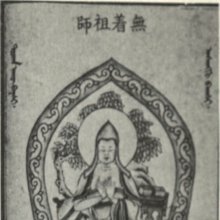
Brother of Vasubandhu. Originally trained as a Hinayanist, but converted his brother Vasubandha to become Mahayanist. They both established the Yogacara School of Buddhism.
The Buddhist who established the Yogcara School of Buddhism. He is considered the author of Mahayanasamgraha, Abhidharmasamuccaya and a commentary on the Samdhinirmocana.
Asaṅga (असङ्ग).—According to Tibetan sources, Asaṅga (965-900 BCE) and Vasubandhu (963-883 BCE) were half-brothers from Puruṣapura of Gāndhāra Janapada and born 900 years after Buddha nirvana. Asaṅga’s father was a Kśatriya whereas Vasubandhu’s father was a Brāhmaṇa. Prasannaśīlā was the mother of Asaṅga and Vasubandhu. Professor J. Takakusu published “The Life of Vasubandhu by Paramārtha” in the year 1904. It is a translation from a Chinese manuscript. It states that a Kauśika Brāhmaṇa family of Puruṣapura (Peshawar) had three sons, Asaṅga, Vasubandhu and Viriñchivatsa. Asaṅga studied Hīnayāna texts from Arhat Pindola and also studied Mahāyāna texts. Hiuen Tsang mentions that Asaṅga initially followed Mahishasaka sect of Buddhism but later he became Mahayanist.
In Jainism
General definition (in Jainism)
Asanga (असन्ग) is the Prakrit name of a Yakṣa chief, obiedient to Vaiśramaṇa (god of wealth, also known as Kubera), according to the Bhagavatī-sūtra, also known as The Vyākhyāprajñapti (“Exposition of Explanations”). The Bhagavatī-sūtra is the largest of twelve Jain āgamas and was composed by Sudharmāsvāmī in the 6th century.

Jainism is an Indian religion of Dharma whose doctrine revolves around harmlessness (ahimsa) towards every living being. The two major branches (Digambara and Svetambara) of Jainism stimulate self-control (or, shramana, ‘self-reliance’) and spiritual development through a path of peace for the soul to progess to the ultimate goal.
Languages of India and abroad
Pali-English dictionary
asaṅga : (m.) non-attachment.
Asaṅga, (adj.) (a + saṅga) not sticking to anything, free from attachment, unattached Th. 2, 396 (°mānasa, = anāsattacitta ThA. 259); Miln. 343. Cp. next. (Page 87)
— or —
Āsaṅga, (ā + saṅga fr. sañj to hang on, cp. Sk. āsaṅga & āsakti) — 1. adhering, clinging to, attachment, pursuit J. IV, 11.—2. that which hangs on (the body), clothing, garment, dress; adj. dressed or clothed in (-°); usually in cpd. uttarāsaṅga a loose (hanging) outer robe e.g. Vin. I, 289; S. IV, 290; PvA. 73; VvÁ 33 (suddh°), 51 (id.). (Page 114)
[Pali to Burmese]
1) asaṅga—
(Burmese text): ငြိ-ကပ်-တွယ်-ခြင်းမရှိသော၊ မငြိ-မကပ်-မတွယ်-သော။
(Auto-Translation): Without any disturbance, neither quiet nor noisy.
2) āsaṅga—
(Burmese text): ငြိကပ်-တွယ်တာ-ခြင်း။
(Auto-Translation): Calm-Handling.

Pali is the language of the Tipiṭaka, which is the sacred canon of Theravāda Buddhism and contains much of the Buddha’s speech. Closeley related to Sanskrit, both languages are used interchangeably between religions.
Marathi-English dictionary
asaṅga (असंग).—a (S) Lone, solitary, wanting a companion. 2 That is not to be associated with. Pr. asaṅgāsīṃ saṅga prāṇāsīṃ gāṇṭha.
--- OR ---
asaṅga (असंग).—m (S) Absence or nonness of companionship.
asaṅga (असंग).—a Lone; that is not to be associa- ted with. m Absence of companion- ship.
Marathi is an Indo-European language having over 70 million native speakers people in (predominantly) Maharashtra India. Marathi, like many other Indo-Aryan languages, evolved from early forms of Prakrit, which itself is a subset of Sanskrit, one of the most ancient languages of the world.
Sanskrit dictionary
Asaṃga (असंग).—a.
1) Not attached, free from worldly ties.
2) Not hindered or obstructed, not blunted; असंगगतयः शीघ्रा हरिवीरा महाबलाः (asaṃgagatayaḥ śīghrā harivīrā mahābalāḥ) Rām.5.51.14. असंगमद्रिष्वपि सारवत्तया (asaṃgamadriṣvapi sāravattayā) R.3.63;
3) Not united, solitary, unassailed.
-gaḥ 1 Non-attachment; अहिंसयोन्द्रियासंगैः (ahiṃsayondriyāsaṃgaiḥ) (sādhayantīha tatpadam) Manusmṛti 6.75.
2) Puruṣa or soul (in Saṅ. Phil.)
-cārin a. moving without obstacle. Rām.5. °वत् (vat) a. not attached to. Rām.3
Āsaṅga (आसङ्ग).—a. Uninterrupted, perpetual. [-gaḥ]
1) Attachment, devotion (to any object) (to enjoy or protect it); सुख° लुब्धः (sukha° lubdhaḥ) K.173; Uttararāmacarita 3; चेतः स्वर्गतरङ्गिणीतटभुवामासङ्ग- मङ्गीकुरु (cetaḥ svargataraṅgiṇītaṭabhuvāmāsaṅga- maṅgīkuru) Bhartṛhari 3.6.
2) Intentness, close application.
3) Contact, adherence, clinging; (paṅkajam) सशैवलासङ्गमपि प्रकाशते (saśaivalāsaṅgamapi prakāśate) Kumārasambhava 5.9;3.46; व्रततिवलयासङ्गसंजातपाशः (vratativalayāsaṅgasaṃjātapāśaḥ) Ś.1.33; Mu.1.14; अनासङ्गः (anāsaṅgaḥ) absence of consolation; Mālatīmādhava (Bombay) 2.
4) Association, connection, union; त्यक्त्वा कर्मफलासङ्गम् (tyaktvā karmaphalāsaṅgam) Bhagavadgītā (Bombay) 4.2; so कान्तासङ्ग (kāntāsaṅga) &c.
5) Fixing, fastening to.
6) Pride about the authorship of a thing (kartṛtvābhimāna),
7) That which is fastened; cf. उत्तरासङ्ग (uttarāsaṅga).
8) Waylaying (?).
-ṅgam A kind of fragrant earth (saurāṣṭramṛttikā).
-ṅgam ind. Without interruption, eternally.
Asaṅga (असङ्ग).—(1) name of an author: Sādhanamālā 325.4 (= 3?); (2) name of a yakṣa: Mahā-Māyūrī 43; (3) see Āryāsaṅga.
Asaṅga (असङ्ग).—mfn.
(-ṅgaḥ-ṅgā-ṅgaṃ) Solitary, unassociated. E. a neg. saṅga with.
--- OR ---
Āsaṅga (आसङ्ग).—m.
(-ṅgaḥ) 1. Attachment to any object. 2. Association, connexion. 3. Proximity, contact. adv. n.
(-ṅgaṃ) Eternally. adj. mfn.
(-ṅgaḥ-ṅgā-ṅgaṃ) Eternal. E. āṅ always, ṣañj to move, ac aff.
Āsaṅga (आसङ्ग).—i. e. ā-sañj + a, m. 1. Being attached, [Śākuntala, (ed. Böhtlingk.)] [distich] 132. 2. Attachment, [Pañcatantra] v. [distich] 93.
--- OR ---
Asaṅga (असङ्ग).—I. m. 1. non-attachment, not being attached to, [Mānavadharmaśāstra] 6, 75. 2. a proper name, [Harivaṃśa, (ed. Calc.)] 9207. Ii. adj. 1. unfastened, Mahābhārata 2, 944. 2. unimpeded, [Raghuvaṃśa, (ed. Stenzler.)] 3, 63 (Mallin., ed. Calc. v. r.).
Asaṅga is a Sanskrit compound consisting of the terms a and saṅga (सङ्ग).
Asaṅga (असङ्ग).—1. [masculine] not sticking to (—°).
--- OR ---
Asaṅga (असङ्ग).—2. asaṅga [adjective] not sticking or hanging, moving freely, independent.
--- OR ---
Asaṅga (असङ्ग).—[adjective] not sticking or hanging, moving freely, independent.
--- OR ---
Āsaṅga (आसङ्ग).—[masculine] = [preceding] [feminine]
1) Asaṅga (असङ्ग):—[=a-saṅga] mfn. or a-saṅga free from ties, independent, [Śatapatha-brāhmaṇa xiv] ([Bṛhad-āraṇyaka-upaniṣad]), [Nṛsiṃha-tāpanīya-upaniṣad]
2) [v.s. ...] moving without obstacle (as a cart, a vessel, a flag, etc.), [Mahābhārata ii, 944; Harivaṃśa] etc.
3) [v.s. ...] having no attachment or inclination for or interest in
4) [v.s. ...] (See also sub voce a-sakta)
5) [v.s. ...] m. non-attachment, non-inclination, [Manu-smṛti vi, 75; Bhāgavata-purāṇa]
6) [v.s. ...] Name of a son of Yuyudhāna, [Harivaṃśa 9207; Viṣṇu-purāṇa]
7) [v.s. ...] a Name of Vasubandhu, [Buddhist literature]
8) Āsaṅga (आसङ्ग):—[=ā-saṅga] [from ā-sañj] m. the act of clinging to or hooking on, association, connection, [Śakuntalā; Kumāra-sambhava; Bhāgavata-purāṇa] etc.
9) [v.s. ...] attachment, devotedness, [Sāhitya-darpaṇa; Kathāsaritsāgara] etc.
10) [v.s. ...] waylaying, [Ṛg-veda; Śatapatha-brāhmaṇa]
11) [v.s. ...] Name of a man, [Ṛg-veda viii, 1, 32; 33]
12) [v.s. ...] of a son of Śva-phalka, [Bhāgavata-purāṇa ix, 24, 15]
13) [v.s. ...] a cloak (see citrās°, p. 397)
14) [v.s. ...] a sword, [cf. Lexicographers, esp. such as amarasiṃha, halāyudha, hemacandra, etc.]
15) [v.s. ...] one of the 7 islands of Antara-dvīpa, [cf. Lexicographers, esp. such as amarasiṃha, halāyudha, hemacandra, etc.]
16) [v.s. ...] n. a kind of fragrant earth, [cf. Lexicographers, esp. such as amarasiṃha, halāyudha, hemacandra, etc.]
17) [v.s. ...] mfn. uninterrupted, [cf. Lexicographers, esp. such as amarasiṃha, halāyudha, hemacandra, etc.]
1) Asaṅga (असङ्ग):—[a-saṅga] (ṅgaḥ-ṅgā-ṅgaṃ) a. Alone.
2) Āsaṅga (आसङ्ग):—[ā-saṅga] (ṅgaḥ-ṅgā-ṅgaṃ) a. Eternal.
Asaṅga (असङ्ग):—1. (3. a + sa) m. das Nichthängen, Nichthaften an Etwas: ahiṃsayendriyāsaṅgaiḥ u. s. w. sādhayantīha tatpadam [Manu’s Gesetzbuch 6, 75.] asaṅgavant adj. nicht hängend an: viṣayeṣu [Rāmāyaṇa 3, 37, 23.]
--- OR ---
Asaṅga (असङ्ग):—2. (wie eben)
1) adj. nicht hängen bleibend, keinen Widerstand findend, sich frei bewegend: asaṅgo devavihitastasminrathavare dhvajaḥ . yojanāddadṛśe [Mahābhārata 2, 944.] asaṅgamadriṣvapi -āyudham ein Geschoss, das keinen Widerstand findet, wenn es auch gegen Berge gerichtet ist, [Raghuvaṃśa 3, 63.] Vgl. [2, 42] und [Mahābhārata 3, 1602] : tasya mūrdhni śitaṃ khaṅgamasaktaṃ parvateṣvapi . mumoca . — nicht anhängend, nicht abhängig: asaṅgo sito na sajyate na vyathate [The Śatapathabrāhmaṇa 14, 6, 9, 28] [?(= Bṛhadāranyakopaniṣad 3, 9, 26). 11, 6. 7, 1, 17. 2, 27 (= Bṛhadāranyakopaniṣad 4, 2, 4. 3, 16. 4, 21). 14, 6, 8, 8 (= Bṛhadāranyakopaniṣad 3, 8, 8).] —
2) m. Nomen proprium ein Sohn Yuyudhāna’s [Harivaṃśa 9207.] [Viṣṇupurāṇa 435.]
--- OR ---
Āsaṅga (आसङ्ग):—(wie eben)
1) m. a) das Anhaften, Anhaken, Anhängen (auch in übertr. Bed.) [Amarakoṣa 3, 3, 2.] pādākṛṣṭavratativalayāsaṅgasaṃjātapāśaḥ (gajaḥ) [Śākuntala 32.] paṅkajaṃ saśaivalāsaṅgaṃ prakāśate [Kumārasaṃbhava 5, 9.] mṛgamadaghanasārāsaṅgasaurabhyabhavyaḥ (pāṇiḥ) [Dhūrtasamāgama 92, 8.] nivṛttānyapuruṣāsaṅgā [Kathāsaritsāgara 12, 90.] [Geschichte des Vidūṣaka 269.] kāntāsaṅga [Pañcatantra V, 83.] tyaktvā karmaphalāsaṅgam [Bhagavadgītā 4, 20.] viṣayāsaṅga [Prabodhacandrodaja 61, 14.] cittāsaṅga [Sāhityadarpana 79, 20.] — b) das sich-an-Jmd-Anhängen, Nachstellung: te surebhya āsaṅgādbibhayāṃ cakruḥ [The Śatapathabrāhmaṇa 1, 1, 2, 3. 3, 1, 5. 4, 4, 8. 6, 1, 11.] tato hainamāsaṅgo na vindati [5, 2, 3, 5.] — c) Nomen proprium eines Mannes [Ṛgveda 8, 1, 32. 33.] —
2) n. eine bes. wohlriechende Erde (tuvarī) [Rājanirghaṇṭa im Śabdakalpadruma] —
3) adj. und adv. = āsakta ununterbrochen [Jaṭādhara im Śabdakalpadruma] — Vgl. uttarāsaṅga .
--- OR ---
Asaṅga (असङ्ग):—2.
2) Beiname eines Vasubandhu [WASSILJEW 217. 221.] [HIOUENTHSANG 1, 269.] — Vgl. niḥsaṅga .
--- OR ---
Āsaṅga (आसङ्ग):—
1) a) anyapuruṣāsaṅga [Kathāsaritsāgara 61, 168.] ajñānāsaṅgāt [Spr. 915.] viṣayāsaṅgaṃ (adj.) manaḥ [4608.] kāntāsaṅga [Pañcatantra V, 83] ist zu streichen, da dieses in kāntā + saṅga zu zerlegen ist.
Asaṅga (असङ्ग):—1. m. —
1) das Nichthängenbleiben , Nichtanstreifen. —
2) das Nichthängen an den Dingen. Abl. so v.a. nach Laune , — Belieben [Bālarāmāyaṇa 62,15.]
--- OR ---
Asaṅga (असङ्ग):—2. und asaṅga —
1) Adj. — a) nicht hängen bleibend , keinen Widerstand findend an (Loc.) , sich frei bewegend. — b) ungebunden , frei [Indische studien von Weber 9,146.164.fg.] Dazu Nom.abstr. tva n. [159.] — c) an den Dingen nicht hängend. Dazu Nom.abstr. tā [R.ed.GORR.1,67,15.] —
2) m. Nomen proprium zweier Männer.
--- OR ---
Āsaṅga (आसङ्ग):——
1) m. (adj. Comp. f. ā) — a) das Anhaken , Hängenbleiben. — b) Nachstellung , Verfolgung. — c) das Hängen — , Hingabe an. — d) Nomen proprium eines Mannes [Ṛgveda (roth). ] EINES Sohnes des Śvaphalka [Bhāgavatapurāṇa 9,24,15.] — e) atreḥ Name eine Sāman [Ārṣeyabrāhmaṇa] —
2) *n. eine Lehmart. —
3) *Adj. und m *Adv. ununterbrochen.
Asaṅga (असङ्ग) in the Sanskrit language is related to the Prakrit words: Asaṃga, Āsaṃga.
Sanskrit, also spelled संस्कृतम् (saṃskṛtam), is an ancient language of India commonly seen as the grandmother of the Indo-European language family (even English!). Closely allied with Prakrit and Pali, Sanskrit is more exhaustive in both grammar and terms and has the most extensive collection of literature in the world, greatly surpassing its sister-languages Greek and Latin.
Hindi dictionary
1) Asaṃga (असंग):—(a) detached; uncommitted.
2) Āsaṃga (आसंग) [Also spelled asang]:—(nm) attachment; association; adhesion.
...
Prakrit-English dictionary
1) Asaṃga (असंग) in the Prakrit language is related to the Sanskrit word: Asaṅga.
2) Āsaṃga (आसंग) also relates to the Sanskrit word: Āsaṅga.
Prakrit is an ancient language closely associated with both Pali and Sanskrit. Jain literature is often composed in this language or sub-dialects, such as the Agamas and their commentaries which are written in Ardhamagadhi and Maharashtri Prakrit. The earliest extant texts can be dated to as early as the 4th century BCE although core portions might be older.
Kannada-English dictionary
Asaṃga (ಅಸಂಗ):—[adjective] not mixed or mixing with (others); not associated with; being aloof; tending to be alone or reserved.
--- OR ---
Asaṃga (ಅಸಂಗ):—[adjective] a man not mingling with others or being reserved.
--- OR ---
Āsaṃga (ಆಸಂಗ):—
1) [noun] something one does in addition to a vocation or regular work, and purely for pleasure or self-satisfaction; hobby; avocation.
2) [noun] relation a) the connections or dealings between or among persons in business or private affairs; b) sexual intercourse; c) the connections or dealings between or among groups, peoples, nations, states, etc.
3) [noun] the quality of sticking; adhesiveness.
Kannada is a Dravidian language (as opposed to the Indo-European language family) mainly spoken in the southwestern region of India.
Nepali dictionary
Asaṅga (असङ्ग):—adj. 1. unattached; free from worldly ties; 2. not united; solitary;
Nepali is the primary language of the Nepalese people counting almost 20 million native speakers. The country of Nepal is situated in the Himalaya mountain range to the north of India.
See also (Relevant definitions)
Partial matches: Sanja, A, Sanga, Na.
Starts with (+15): Acankatam, Acankati, Asamgahana, Asangabahula, Asangabaladharin, Asangabalaviryamati, Asangabuddhi, Asangacari, Asangacarin, Asangacchanaka, Asangacitta, Asangadharani, Asangadharma, Asangadhvaja, Asangaha, Asangahaka, Asangahakabhava, Asangahakarana, Asangahakatta, Asangahakattabhava.
Full-text (+425): Uttarasanga, Vyasanga, Amritasanga, Indriyasanga, Pratyasanga, Parasanga, Cittasanga, Samasanga, Byasanga, Asangavat, Ashankam, Vishayasanga, Nirasanga, Anasanga, Bahuasanga, Asangapubbaka, Asangakarana, Nirasangabhava, Asangabahula, Asangamanasa.
Relevant text
Search found 113 books and stories containing Asanga, A-sanga, A-saṅga, Ā-saṅga, A-sanja-na, Ā-sanja-ṇa, Asamga, Asaṃga, Āsaṃga, Āsaṅga, Asaṅga, Na-sanga, Na-saṅga; (plurals include: Asangas, sangas, saṅgas, nas, ṇas, Asamgas, Asaṃgas, Āsaṃgas, Āsaṅgas, Asaṅgas). You can also click to the full overview containing English textual excerpts. Below are direct links for the most relevant articles:
Rig Veda (translation and commentary) (by H. H. Wilson)
Dictionaries of Indian languages (Kosha)
Page 273 < [Bengali-Hindi-English, Volume 1]
Page 189 < [Marathi-Hindi-English, Volume 1]
Page 35 < [Hindi-Marathi-English Volume 1]
History of Indian Medicine (and Ayurveda) (by Shree Gulabkunverba Ayurvedic Society)
Chapter 11 - Institutions and Universities < [Part 2-3 - Medical Institutions in Ancient India]
Maha Prajnaparamita Sastra (by Gelongma Karma Migme Chödrön)
Class 5: The eight liberations (vimokṣa) < [Class (5) liberations, (6) masteries and (7) totalities]
Appendix 5 - The body of the Dharma (dharmakāya) < [Chapter XXVI - Exertion]
Preliminary note (1): The eighteen āveṇikadharmas of the Buddhas < [Chapter XLI - The Eighteen Special Attributes of the Buddha]
Krishna Sandarbha of Jiva Goswami (by Kusakratha Prabhu)
Verse 106.18 < [Anuccheda 106]
A Historical Study of Kaushambi (by Nirja Sharma)
Related products


