
With the state’s clean slate law now in effect, organizations and legal experts gathered Thursday on Portsmouth’s Airline Boulevard to lay out the process of sealing or expunging prior criminal convictions.
The event, organized by Portsmouth Commonwealth’s Attorney Stephanie Morales and Del. Don Scott, a Democrat from Portsmouth, was meant to spread the word about the new law, which went into effect July 1, and help residents navigate it.
The legislation is designed to make it easier for those with some lower level criminal convictions to have more access to jobs, housing and other opportunities. Some public records advocates allege that it also unfairly limits access to what should be public information.
“The worst day of your life should not follow you for the rest of your life,” Morales said. “When you do not have access to jobs or housing, that contributes to harmful behaviors in our community. We have a responsibility to speak up about what is harmful to our communities.”
Giving second chances, and removing barriers for citizens to be successful, are crucial to addressing the root causes of crime in Portsmouth and across Virginia, Morales said.
Several Hampton Roads residents who attended the event had been unable to secure full-time employment or find housing outside of staying with family as a result of criminal convictions. Speaking with legal experts at the information session, they gained clarity on what steps to seal their conviction and help them move forward.
To start, experts said, reach out to the Virginia State Police to get a copy of your criminal record. That means filling out the SP-167 form (that requires a fee of up to $20), print it out and get the signature on the form notarized.
An applicant then sends the form to the address listed in the state police’s instructions.
The new law allows for most misdemeanors with a conviction date of at least seven years ago, and certain Class 5 and 6 felonies with a conviction date of at least 10 years ago, to be sealed — as long as the applicant has had no convictions since then.
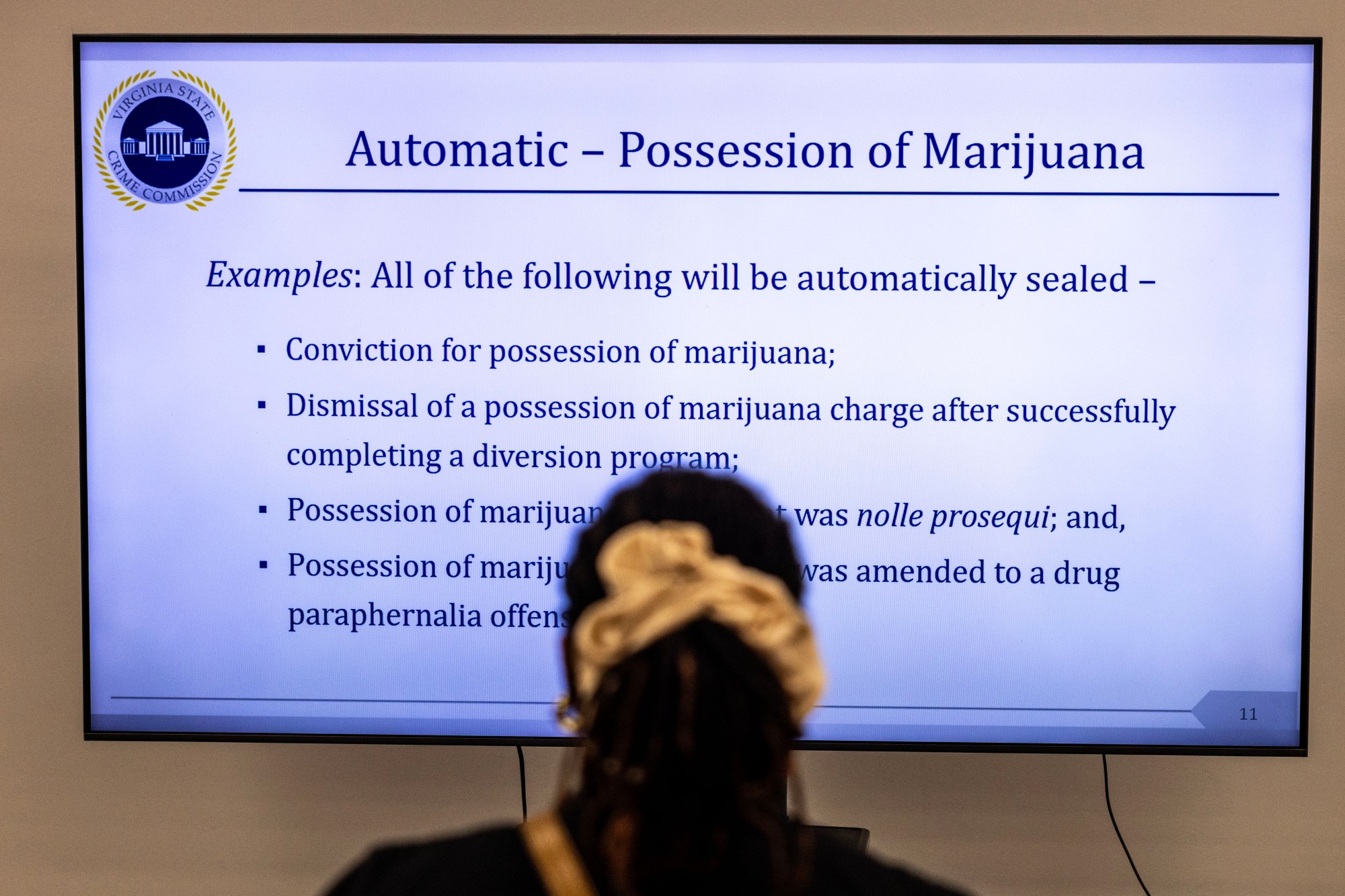
Common felony convictions eligible for sealing include possession of drugs, such as marijuana, and grand larceny.
The statute lists over a dozen exceptions of charges that cannot be sealed, including offenses considered to be violent or sexual offenses. While drug possession is eligible for sealing, drug distribution is not.
For those convicted at least seven years ago of petty larceny, concealment, three types of trespassing, misdemeanor possession of marijuana with or without the intent to distribute or disorderly conduct and who have not reoffended, convictions will be sealed automatically beginning Oct. 1.
Felony convictions and certain misdemeanors require an applicant file a petition to seal them.
Until June 2027, the Virginia Lawyer Referral Service has waived what is usually a $35 fee to have a 30-minute consultation with an attorney, allowing those interested in sealing their records to consult expert legal counsel in the locality they were convicted for free about how to do so.
The new law allows two opportunities to file a petition to seal a conviction over a lifetime. Applicants can file a petition to seal multiple convictions at once if those convictions stemmed from the same arrest.
To file a petition, applicants must fill out the CC-1201 form, available on the Virginia State Supreme Court’s sealing website.
The petition and related paperwork — including the warrants and indictments describing the conviction — must be filed to the Circuit Court Clerk’s Office and Commonwealth’s Attorney’s Office in the locality in which the applicant was convicted.
The local prosecutors have 30 days to object to your petition. If they do, a hearing will likely be scheduled at which the applicant must establish a “manifest injustice.”
A “manifest injustice” is legal terminology for proving to the judge that not having your conviction sealed is causing you harm, such as loss of employment or housing opportunities, or will cause you harm in the future.
If local prosecutors do not object, a judge still must decide whether to seal a conviction.

Any records that have been sealed can only be viewed by law enforcement, prosecutors, judges, probation officers, and some employers in fields such as security or caring for vulnerable populations.
Executive director of the Virginia Coalition for Open Government Megan Rhyne said her organization is always “concerned when previous public records are taken out of the public realm.”
While advancing a person’s ability to get a second chance is important, she believes “there’s value in being able to look into the backgrounds of people running for office or being put in positions of great public trust.”
As of Friday, 350 petitions for record sealing have been filed statewide, according to the Virginia State Crime Commission.
If you have general informational questions about the record sealing process, you can email Expungement and Sealing Resource Attorney Lauren Young at the Virginia Indigent Defense Commission. She has also created a guide accessible through the agency’s website with more detailed resources on the record sealing and expungement process.
Thursday’s event was busy with people from across Hampton Roads curious about how the new law could help them. But the past criminal convictions of several attendees didn’t qualify for sealing — whether they were convicted too recently, their offense was on the federal level or the eligibility of sealing their charge under the law remained ambiguous.
After serving eight years in the Navy, Scott said when returned home with a college degree he couldn’t get an office job because of a drug possession charge from a period of addiction.
And 32 years later, he is Speaker of the Virginia House of Delegates.
“And there are people here right now who can do the same thing,” he said. “We just have to get out of their way.”
Scott said there will be more record sealing information sessions hosted across Virginia, including in Chesapeake and Richmond.
Nori Leybengrub, 757-349-3523, nori.leybengrub@virginiamedia.com
