

Prefer a PDF?
No worries! Get it here
☁️ From the CEO
Fellow Shareholders,
Q4 was another outstanding quarter, capping off an incredible fiscal year. We’re firing across every strategic priority – enterprise, AI and the system of work – while driving durable, profitable growth.
Total revenue was strong at $1.8B, up 28% y/y
🚀 Cloud revenue surged to $1.2B, with growth accelerating to 31% y/y
Subscription ARR of $6.6B, up 23% y/y
RPO grew to $4.8B, up 44% y/y
GAAP operating margin of 12%
Rovo assisted actions grew over 50% q/q
Customers are increasingly turning to Atlassian as a trusted, long-term partner as they navigate their AI transformations and this is reflected in our Q4 performance.
Enterprise: Our customers are deciding what kinds of companies they want to be in the AI era. They continue to vote with their wallets, doubling down on Atlassian with larger and longer deals, as reflected in our RPO growth.
- We had an all time record quarter in $1M+, $3M+ and $5M+ ACV deals.
- Our $3M+ ARR customers grew more than 50% y/y, and our $5M+ ARR customers grew more than 70% y/y.
- We signed the largest enterprise deal in Atlassian’s history with one of the world’s largest consumer technology companies.
AI: Rovo usage is driving greater engagement with the Atlassian platform. Over 80% of Fortune 500 companies now use Rovo, but where we see the needle really moving, is depth of usage – saving time and accelerating innovation across organizations.
- Rovo assisted actions are up over 50% q/q, translating into millions of hours saved every month for our customers.
- Customers that adopt Rovo are completing 20% more Jira work items and creating/editing 25% more Confluence pages versus non-adopters.
- Rovo adopters continue to grow their ARR more than 2x faster than non-adopters.
System of Work: Customers like Warner Bros, Xero, and a leading AI chip manufacturer upgraded to Teamwork Collection this quarter, and top enterprises like Adobe and Google Cloud continue to deepen their commitment to the Atlassian platform to power their system of work.
- Teamwork Collection has been a massive success in its inaugural year in the market, outperforming our expectations. It’s driving broader platform adoption, greater customer value, and in return – higher ARPU.
- Teamwork Collection customers continue to use >2x more AI credits per user and deploy 2x more active agents than standalone customers.
- Service Collection revenue growth accelerated with customers deploying more AI-powered service desks. Agentic automations in Service Collection have increased nearly 3x over the past 6 months.
Driving durable, profitable growth: Our financial discipline gives us the runway to self-fund further investment in AI and enterprise sales, while accelerating our path to sustained GAAP profitability.
- In Q4 we delivered GAAP profitability, and GAAP operating margin of 12%.
These results didn’t happen by chance. Through all the near-term noise we have remained focused on building for the long term. The years of investment we’ve made in our platform have given us two structural advantages that will define Atlassian’s value in the AI era: the System of Work and the Teamwork Graph.

The Teamwork Graph
The most underappreciated part of Atlassian is the Teamwork Graph.
Organizations move faster in the AI era when they combine the right context with the right intelligence. Models are fantastic and continually improving. Organizations can hire intelligence by the token.
Context is much harder for organizations to build. And it cannot be hired.
With the Teamwork Graph, we’ve built one of the best context graphs that exists for enterprise knowledge.
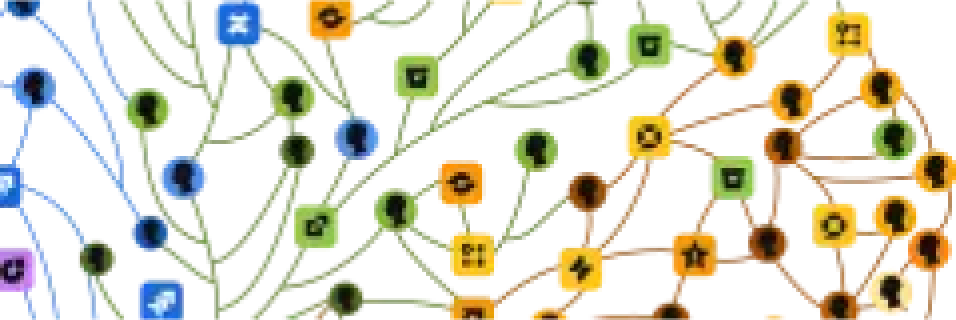
The Teamwork Graph is continually cross referencing, interlinking, inferring, indexing and pre-calculating relationships from billions of objects across six different contexts within your organization. The graph is a singular ontology, building a unified map of how everything relates.
There are six contexts that are woven together into a single graph:
| Without Knowledge Context: Here’s a generic project plan template based on best practices. With Knowledge Context: Based on the architecture decision your team documented in Confluence last quarter, the constraints in your migration RFC, and the technical spec your team shared in the Google Drive folder, here’s a plan that accounts for the dependencies you’ve already identified. | |
| Without Work Context: You have 12 open tickets. Here’s a summary. With Work Context: Three of those Jira tickets are blocking the payments team’s sprint goal, which ladders up to the Q3 revenue target your leadership committed to in Salesforce. I’d prioritize those. | |
| Without Communications Context: I can draft a follow-up email for you. With Communications Context: In last Tuesday’s Slack thread, your engineering lead flagged a concern about the timeline. The same issue came up in the Loom Sarah recorded after the offsite, and your Outlook calendar shows the exec review is Thursday. I’d address both concerns before then. | |
| Without Code Context: Here’s how you’d typically implement a rate limiter. With Code Context: Your auth service already has a rate limiter in the middleware layer, merged in a GitHub PR three weeks ago. You can extend that pattern rather than building from scratch, and it won’t conflict with the caching changes in the current sprint. | |
| Without Assets Context: Here are general troubleshooting steps for a power transformer fault. With Assets Context: Transformer TF-4402 at your Geelong substation has tripped twice in 90 days. The ServiceNow CMDB shows the cooling system was flagged for follow-up but never actioned. I’d start there. | |
| Without People Context: You should check with someone in engineering about this. With People Context: Priya in the Platform Team owns this service. Her Workday profile shows she’s the on-call lead this week, and she’s active in the #platform-eng Slack channel. She’s your fastest path to an answer. |
Note- The “with context” and “without context” examples above are illustrative and provided for explanatory purposes only.
Fundamentally – it’s the combination of all these contexts, connected in one graph, that give you (and your agents) better, cheaper and faster answers.
This is the most comprehensive set of context and graph available today. And all of these contexts are continually cross referenced, linked and learned from.
Why us?
For almost 25 years, we’ve been connecting teams. Our mission is to unleash the potential of every team. More than 350,000 organizations across every industry use the Atlassian’s System of Work to plan, track, and execute, with hundreds of millions of workflows every single month. That’s two and a half decades of deep, structured and unstructured data about work that no one else has – along with hundreds of millions of links to related documents, meetings, customers, etc.
Already, all this history is in every customer’s Teamwork Graph.
In an enterprise, the hardest problems are often coordination problems – weeks lost waiting for a decision, a handoff, or a dependency to clear. While most of the market focuses on helping individuals move faster, our platform is built around how human and human/AI teams move better, together.
And as we move into a world of greater human/AI collaboration where agents take on more execution, the challenge shifts from doing the work to orchestrating it. This is where Atlassian has always played, and where our advantage is compounding. The world runs on teams. Teams run on context. We connect the two.
How does it show up for customers?
Simply put, the Teamwork Graph helps every customer get better, faster and cheaper results for their people and their agents. It’s baked into our platform and those advantages compound the more applications and contexts a customer connects.
In numbers, here’s what is being delivered:
- Over 200 billion objects and connections across all customer graphs, growing every week.
- For agents grounded in the Teamwork Graph, we’re seeing up to 44% more accurate answers while consuming 48% fewer tokens.
- 👉️ Customers using the Teamwork Graph heavily are spending less on tokens than their peers for equivalent work.
- The Teamwork Graph is open. It’s accessible in our applications, via our MCP server and the Teamwork Graph CLI. Monthly active users (MAU) of our MCP server and the Teamwork Graph CLI more than doubled during the quarter, to surpass 1 million MAU, with overall MCP calls up more than 400%.
- Jira work items and Confluence pages generated via MCP are up nearly 4x from the prior quarter.
- 👉️ Agents are active contributors to the Teamwork Graph, not just consumers of it. This creates a compounding advantage for the context in the graph.
- 98% of MCP users are also active in Jira UI in the same month Q&A
- 👉️ Humans and agents working together in the same platform, on the same work.
- We’ve improved chat quality and satisfaction by 20%, as a direct result of improving the quality of graph responses.
- 👉️ Every time we improve the graph density, and search ranking we get better chat results for humans and agents.
- MCP adopters are significantly stickier, expand their paid seats faster, and grow their ARR at rates 2x faster than non-adopters.
- 👉️ The more agents work alongside humans in our system of work, the more valuable the platform becomes for both.
The Innovation Beat Doesn’t Stop
Last quarter, we talked about the incredible innovation across our Service Collection. This quarter, we’re highlighting how the Teamwork Graph is powering a wave of new capabilities in Jira, designed to meet teams where they work in an increasingly agent-driven world.
Agents in Jira: Teams can now assign tasks directly to AI agents inside Jira, with full access to goals, decisions, comment history, and more from the Atlassian Teamwork Graph. Jira becomes the control plane and teams always know who’s doing what, why, and when.
Claude and Cursor in Jira: Assign a Jira issue to Claude or Cursor and the agent reads it, accesses the repo, and opens a draft PR, all within Jira’s permissions and audit trail. Jira automations can trigger this automatically, with no manual handoff required.
Jira Coding Agent: Powered by frontier models, the Jira Coding Agent uses the Atlassian Teamwork Graph’s enterprise context and code intelligence to turn work items into ready-to-review pull requests, allowing rapid fixes and workflows within Jira without requiring local environment setup.
Jira Cloud for Slack: The new @Jira agent turns Slack conversations into context-rich work items, assigns tasks, and syncs threads as comments, without leaving Slack.
Agent Sessions in Jira: As teams run more agents, tracking what each one did, what’s blocked, and what needs review becomes its own coordination problem. Agent Sessions surfaces all agent activity in a single view, grouped by what needs attention first.
Create with Rovo in Jira: Describe what needs doing, add a link, and Rovo spins up a context-rich Jira work item in seconds, ready to be tracked, prioritized, or handed off to an agent.
Looking ahead
Q4 closes out a year that proves our long-term strategy is paying off.
We’ve spent almost a quarter of a century building a platform that nobody else has. A deep, structured knowledge of how teams work. And that’s what enables us to power the Teamwork Graph to make AI better, faster and cheaper.
To help us accelerate this next phase, we’ve appointed Ken Exner as Chief Product Officer for Enterprise and Emerging, bringing more than 30 years building and scaling developer platforms across major technology shifts.
We have a great Team. We have clarity and conviction. We’re executing on our long-term platform strategy and it shows in our results. We remain steadfast in our bullishness on the future.
The best is still to come.


