Keynesian economists generally argue that aggregate demand is volatile and unstable and that, consequently, a market economy often experiences inefficient macroeconomic outcomes, including recessions when demand is too low and inflation when demand is too high. Further, they argue that these economic fluctuations can be mitigated by economic policy responses coordinated between a government and their central bank. In particular, fiscal policy actions taken by the government and monetary policy actions taken by the central bank, can help stabilize economic output, inflation, and unemployment over the business cycle. Keynesian economists generally advocate a regulated market economy – predominantly private sector, but with an active role for government intervention during recessions and depressions. (Full article...)
Friedman's challenges to what he called "naive Keynesian theory" began with his interpretation of consumption, which tracks how consumers spend. He introduced a theory which would later become part of mainstream economics and he was among the first to propagate the theory of consumption smoothing. During the 1960s, he became the main advocate opposing both Marxist and Keynesian government and economic policies, and described his approach (along with mainstream economics) as using "Keynesian language and apparatus" yet rejecting its initial conclusions. He theorized that there existed a natural rate of unemployment and argued that unemployment below this rate would cause inflation to accelerate. He argued that the Phillips curve was in the long run vertical at the "natural rate" and predicted what would come to be known as stagflation. Friedman promoted a macroeconomic viewpoint known as monetarism and argued that a steady, small expansion of the money supply was the preferred policy, as compared to rapid and unexpected changes. His ideas concerning monetary policy, taxation, privatization, and deregulation influenced government policies, especially during the 1980s. His monetary theory influenced the Federal Reserve's monetary policy in response to the 2008 financial crisis. (Full article...)
Economics classes make extensive use of supply and demand graphs like this one to teach about markets. In this graph, S and D refer to supply and demand and P and Q refer to the price and quantity.The following outline is provided as an overview of and topical guide to economics. Economics is a branch of science that analyzes the production, distribution, and consumption of goods and services. It aims to explain how economies work and how agents (people) respond to incentives.
Economics is a behavioral science (a scientific discipline that focuses on the study of human behavior) as well as a social science (a scientific discipline that explores aspects of human society). (Full article...)
Image 6
Econometrics is an application of statistical methods to economic data in order to give empirical content to economic relationships. More precisely, it is "the quantitative analysis of actual economic phenomena based on the concurrent development of theory and observation, related by appropriate methods of inference." An introductory economics textbook describes econometrics as allowing economists "to sift through mountains of data to extract simple relationships." Jan Tinbergen is one of the two founding fathers of econometrics. The other, Ragnar Frisch, also coined the term in the sense in which it is used today.
From an economic perspective, contract theory studies how economic actors can and do construct contractual arrangements, generally in the presence of information asymmetry. Because of its connections with both agency and incentives, contract theory is often categorized within a field known as law and economics. One prominent application of it is the design of optimal schemes of managerial compensation. In the field of economics, the first formal treatment of this topic was given by Kenneth Arrow in the 1960s. In 2016, Oliver Hart and Bengt R. Holmström both received the Nobel Memorial Prize in Economic Sciences for their work on contract theory, covering many topics from CEO pay to privatizations. Holmström focused more on the connection between incentives and risk, while Hart on the unpredictability of the future that creates holes in contracts.
A standard practice in the microeconomics of contract theory is to represent the behaviour of a decision maker under certain numerical utility structures, and then apply an optimization algorithm to identify optimal decisions. Such a procedure has been used in the contract theory framework to several typical situations, labeled moral hazard, adverse selection and signalling. The spirit of these models lies in finding theoretical ways to motivate agents to take appropriate actions, even under an insurance contract. The main results achieved through this family of models involve: mathematical properties of the utility structure of the principal and the agent, relaxation of assumptions, and variations of the time structure of the contract relationship, among others. It is customary to model people as maximizers of some von Neumann–Morgenstern utility functions, as stated by expected utility theory. (Full article...)
The NIE assume that individuals are rational and that they seek to maximize their preferences, but that they also have cognitive limitations, lack complete information and have difficulties monitoring and enforcing agreements. As a result, institutions form in large part as an effective way to deal with transaction costs. (Full article...)
Even though he never held a professorial position, Thünen had substantial influence on economics. He has been described as one of the founders of agricultural economics and economic geography. He made substantial contributions to economic debates on rent, land use, and wages. (Full article...)
Image 10
World GDP per capita, 1400–2003 Economic history is the study of history using methodological tools from economics or with a special attention to economic phenomena. Research is conducted using a combination of historical methods, statistical methods and the application of economic theory to historical situations and institutions. The field can encompass a wide variety of topics, including equality, finance, technology, labour, and business. It emphasizes historicizing the economy itself, analyzing it as a dynamic entity and attempting to provide insights into the way it is structured and conceived.
In RBC models, business cycles are described as "real" because they reflect optimal adjustments by economic agents rather than failures of markets to clear. As a result, RBC theory suggests that governments should concentrate on long-term structural change rather than intervention through discretionary fiscal or monetary policy. These ideas are strongly associated with freshwater economics within the neoclassical economics tradition, particularly the Chicago School of Economics. (Full article...)
The neoclassical synthesis is a macroeconomic theory that emerged in the mid-20th century, combining the ideas of neoclassical economics with Keynesian economics. The synthesis was an attempt to reconcile the apparent differences between the two schools of thought and create a more comprehensive theory of macroeconomics. (Full article...)
Gesell is mainly known for his monetary theory. In particular, he noted the asymmetry between the durability and hoardability of money and the finite shelf life of goods and services which depreciate due to entropy and the passage of time. He believed that people who are able to save or hoard money have an unfair economic advantage over people who are dependent on producing and selling decayable goods and services for their livelihoods. Gesell theorized that the unfair premium enjoyed by hoarders expressed itself in interest rates and spawned recessions, an argument that later influenced John Maynard Keynes's theory of liquidity preference. To resolve this problem, Gesell proposed a new form of money that depreciates over time (German: Freigeld). (Full article...)
Adam Smith (baptised 16 June [O.S. 5 June] 1723 – 17 July 1790) was a Scottish economist and philosopher who was a pioneer in the field of political economy and key figure during the Scottish Enlightenment. Seen by many as the "father of economics" or the "father of capitalism", he is primarily known for two classic works: The Theory of Moral Sentiments (1759) and An Inquiry into the Nature and Causes of the Wealth of Nations (1776). The latter, often abbreviated as The Wealth of Nations, is regarded as his magnum opus, marking the inception of modern economic scholarship as a comprehensive system and an academic discipline. Smith refuses to explain the distribution of wealth and power in terms of divine will and instead appeals to natural, political, social, economic, legal, environmental and technological factors, as well as the interactions among them. The work is notable for its contribution to economic theory, particularly in its exposition of the concept of absolute advantage.
Born in Kirkcaldy, Fife, he studied social philosophy at the University of Glasgow and at the University of Oxford, where he was one of the only students to benefit from scholarships set up by John Snell. Following his graduation, he delivered a successful series of public lectures at the University of Edinburgh, that met with acclaim. This led to a collaboration with David Hume during the Scottish Enlightenment. Smith obtained a professorship at Glasgow, where he taught moral philosophy. During this period, he wrote and published The Theory of Moral Sentiments. Subsequently, he assumed a tutoring position that facilitated travel throughout Europe, where he encountered intellectual figures of his era. (Full article...)
For Walras, exchanges only take place after a Walrasian tâtonnement (French for "trial and error"), guided by the auctioneer, has made it possible to reach market equilibrium. It was the general equilibrium obtained from a single hypothesis, rarity, that led Joseph Schumpeter to consider him "the greatest of all economists". The notion of general equilibrium was very quickly adopted by major economists such as Vilfredo Pareto, Knut Wicksell and Gustav Cassel. John Hicks and Paul Samuelson used the Walrasian contribution in the elaboration of the neoclassical synthesis. For their part, Kenneth Arrow and Gérard Debreu, from the perspective of a logician and a mathematician, determined the conditions necessary for equilibrium. (Full article...)
Mathematics allows economists to form meaningful, testable propositions about wide-ranging and complex subjects which could less easily be expressed informally. Further, the language of mathematics allows economists to make specific, positive claims about controversial or contentious subjects that would be impossible without mathematics. Much of economic theory is currently presented in terms of mathematical economic models, a set of stylized and simplified mathematical relationships asserted to clarify assumptions and implications. (Full article...)
Image 20
The Austrian school is a heterodoxschool of economic thought that advocates strict adherence to methodological individualism, the concept that social phenomena result primarily from the motivations and actions of individuals along with their self-interest. Austrian-school theorists hold that economic theory should be exclusively derived from basic principles of human action.
Complexity economics, or economic complexity, is the application of complexity science to the problems of economics. It relaxes several common assumptions in economics, including general equilibrium theory. While it does not reject the existence of an equilibrium, it features a non-equilibrium approach and sees such equilibria as a special case and as an emergent property resulting from complex interactions between economic agents. The complexity science approach has also been applied as the primary field in computational economics. (Full article...)
Image 22
Alan Greenspan (born March 6, 1926) is an American economist who served as the 13th chairman of the Federal Reserve from 1987 to 2006. He worked as a private adviser and provided consulting for firms through his company, Greenspan Associates LLC.
First nominated to the Federal Reserve by President Ronald Reagan in August 1987, Greenspan was reappointed at successive four-year intervals until retiring on January 31, 2006, after the second-longest tenure in the position, behind only William McChesney Martin. President George W. Bush appointed Ben Bernanke as his successor. Greenspan came to the Federal Reserve Board from a consulting career. Although he was subdued in his public appearances, favorable media coverage raised his profile to a point that several observers likened him to a "rock star". Democratic leaders of Congress criticized him for politicizing his office because of his support for Social Security privatization and tax cuts. (Full article...)
... that the Canadian journalist Bernard Descôteaux is credited with the economic revival of the independent newspaper Le Devoir?
... that when the COVID-19 pandemic began, Masyita Crystallin was instructed by the Indonesian finance minister to study the Spanish flu to help formulate unconventional economic policies?
For editor resources and to collaborate with other editors on improving Wikipedia's Economics-related articles, see WikiProject Economics.
Selected images
Image 1Pollution can be a simple example of market failure; if costs of production are not borne by producers but are by the environment, accident victims or others, then prices are distorted.
Image 8A 1638 painting of a French seaport during the heyday of mercantilism
Image 9The publication of Adam Smith's The Wealth of Nations in 1776 is considered to be the first formalisation of economic thought.
Image 10Economists study trade, production, and consumption decisions, including those that occur in a traditional marketplace
Image 11The supply and demand model describes how prices vary as a result of a balance between product availability and demand. The graph depicts an increase in demand from D1 to D2 and the resulting increase in price and quantity required to reach a new equilibrium point on the supply curve (S).
The International Monetary Fund (IMF) approves the release of US$1.2 billion to Pakistan to assist with recovery from an economic crisis. The country has already received $3.3 billion from the IMF since last year. (AP)


![Image 1 Polanyi, c. 1918 Karl Paul Polanyi (/poʊˈlænji/; Hungarian: Polányi Károly [ˈpolaːɲi ˈkaːroj]; 25 October 1886 – 23 April 1964) was an Austro-Hungarian economic historian, economic sociologist, and politician, best known for his book The Great Transformation, which questions the conceptual validity of self-regulating markets. In his writings, Polanyi advances the concept of the Double Movement, which refers to the dialectical process of marketization and push for social protection against that marketization. He argues that market-based societies in modern Europe were not inevitable but historically contingent. Polanyi is remembered best as the originator of substantivism, a cultural version of economics, which emphasizes the way economies are embedded in society and culture. This opinion is counter to mainstream economics but is popular in anthropology, economic history, economic sociology and political science. (Full article...)](./?mortyurl=https%3A%2F%2Fupload.wikimedia.org%2Fwikipedia%2Fen%2Fd%2Fd2%2FBlank.png)


![Image 1 Polanyi, c. 1918 Karl Paul Polanyi (/poʊˈlænji/; Hungarian: Polányi Károly [ˈpolaːɲi ˈkaːroj]; 25 October 1886 – 23 April 1964) was an Austro-Hungarian economic historian, economic sociologist, and politician, best known for his book The Great Transformation, which questions the conceptual validity of self-regulating markets. In his writings, Polanyi advances the concept of the Double Movement, which refers to the dialectical process of marketization and push for social protection against that marketization. He argues that market-based societies in modern Europe were not inevitable but historically contingent. Polanyi is remembered best as the originator of substantivism, a cultural version of economics, which emphasizes the way economies are embedded in society and culture. This opinion is counter to mainstream economics but is popular in anthropology, economic history, economic sociology and political science. (Full article...)](./?mortyurl=https%3A%2F%2Fen.wikipedia.org%2Fwiki%2FFile%3ABlank.png)


 Pollution can be a simple example of market failure; if costs of production are not borne by producers but are by the environment, accident victims or others, then prices are distorted.
 A basic illustration of a business cycle (from Economics)
 The circulation of money in an economy in a macroeconomic model. In this model, the use of natural resources and the generation of waste, such as greenhouse gases, is not included. (from Economics)
 John Maynard Keynes, a key economics theorist (from Economics)
 An example production–possibility frontier with illustrative points marked (from Economics)
 An environmental scientist sampling water
 A 1638 painting of a French seaport during the heyday of mercantilism
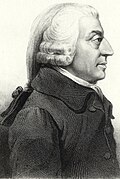 The publication of Adam Smith's The Wealth of Nations in 1776 is considered to be the first formalisation of economic thought.
 Economists study trade, production, and consumption decisions, including those that occur in a traditional marketplace
 The supply and demand model describes how prices vary as a result of a balance between product availability and demand. The graph depicts an increase in demand from D1 to D2 and the resulting increase in price and quantity required to reach a new equilibrium point on the supply curve (S).
 The U.S. unemployment rate from 1990 to 2022 (from Economics)
 São Paulo Stock Exchange in Brazil, an electronic trading network that brings together buyers and sellers through an electronic trading platform
 List of countries by gross domestic product (PPP) per capita in April 2022 (from Economics)


 Commons
 Wikibooks
 Wikidata
 Wikinews
 Wikiquote
 Wikisource
 Wikiversity
 Wiktionary